Nobody notices a pond that works
On a good commercial site, the pond is scenery. Employees eat lunch next to it. Tenants walk past it. Nobody thinks about it once.
That is the pond doing its job, and the job is not decorative. It is managing stormwater, satisfying a permit condition, and keeping water off the parking lot and away from the building pad. When it stops doing that, the problem is usually a liability before it is ever a visible one, and that is true of most commercial pond problems Dallas property managers run into.
The short list of what goes wrong
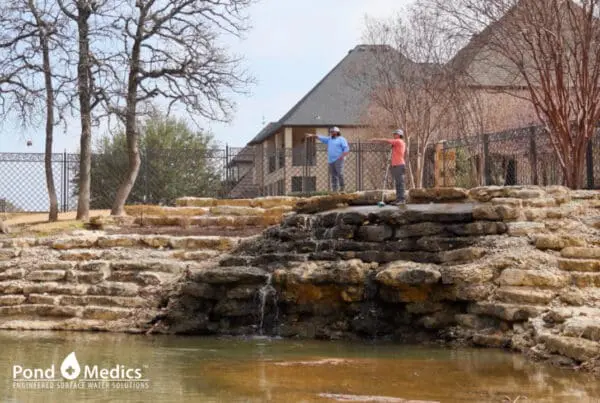
Almost every commercial pond problem in DFW is one of four things: banks eroding along a driveway or parking lot, an outlet structure that is clogged or undersized for the volume the site now generates, sediment that has quietly taken storage capacity, or drainage so slow that water stands long after the storm has passed.
Each starts small and stays invisible until it turns up as a wet parking lot, a washed-out slope by a building pad, or a letter from the city.
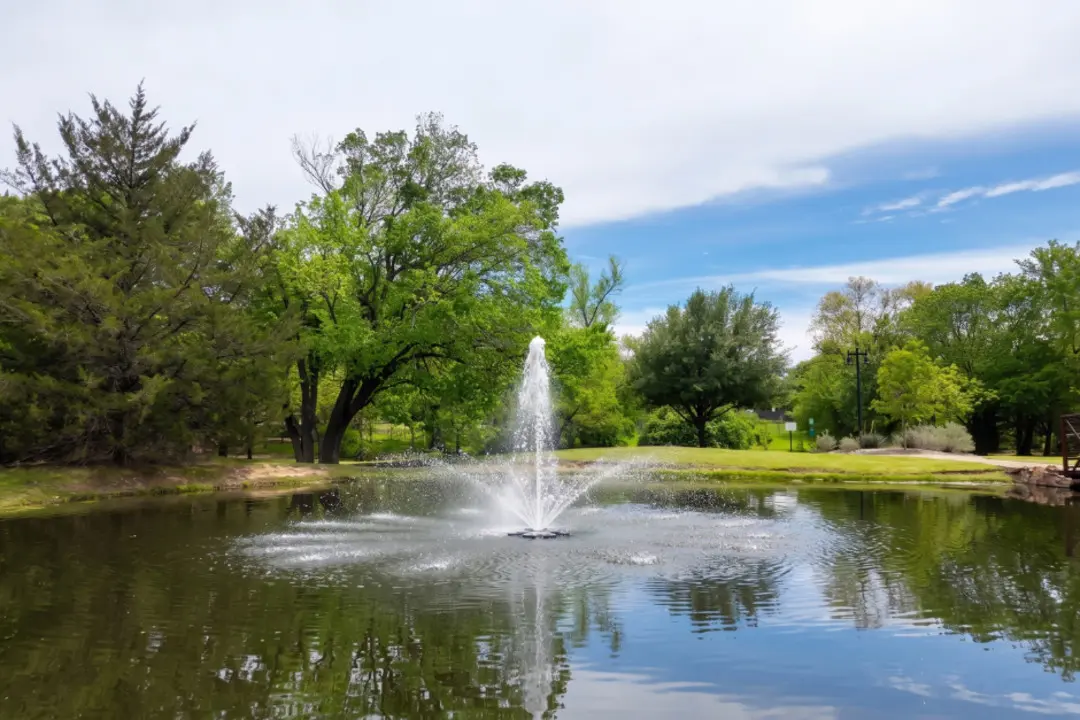
Which brand answers each of these commercial pond problems depends on what it is. PondCure is the reset button for the structural work: banks, slopes, outlet structures, headwalls, spillways and channels. dredgeSMART handles lost storage, working from bathymetric survey data against the original design volume. Simple Pond Care takes the water itself (algae, odor and clarity, the things your tenants actually see) as a subscription with monitoring and reporting, with treatment delivered through AquaInject rather than guessed at. And where the real gap is owning aesthetic equipment, Fountain Freedom runs it as a service; you never buy the equipment.
The fix is almost always cheaper than the failure. A section of eroding bank caught early is a targeted repair; the same erosion left a few more storm seasons can undercut a drive aisle or a retaining wall.
Who is responsible, and where it is written
Commercial stormwater systems are built to a permit, and the permit assumes someone keeps the system performing as designed, whether that is a dry detention basin built to drain within a set window after a storm, or a wet retention pond built to hold a permanent pool.
In most DFW cities that someone is the property owner, and the duty usually arrives through the recorded plat: the drainage and detention easements dedicated on it, and the easement language that says plainly the city will not maintain them. Fort Worth goes further and requires a separately recorded Stormwater Facility Maintenance Agreement. Dallas goes the other way: its development code puts routine maintenance on adjoining owners but keeps the city responsible for major maintenance and repair necessary for public safety and welfare.
Pull your plat before you assume. It takes an afternoon and it occasionally changes the answer.
How often to look
A structural review once a year, plus a check after any major storm. North Texas gives you long dry stretches and violent storm systems in the same calendar year, and each exposes something different: drought shows how much storage you have actually lost, a big storm shows whether the outlet can still move what it needs to.
Properties with erosion history, an aging outlet, or a pond nobody has assessed in years benefit from a tighter interval until the underlying issue is dealt with.
Stop buying visits. Buy performance.
Here is where most commercial pond contracts go wrong, and it is not the part anyone argues about.
A typical agreement specifies activity: how many inspections, how often, what gets checked. It sounds rigorous. But it pays a vendor for showing up, which means the vendor is made whole whether or not your pond performs, and in the worst version, the vendor earns more when it does not.
No property manager has ever told their ownership group the good news is that they received twelve site visits.
What you actually need is for the basin to drain within its design window, the banks to hold, the permit to stay satisfied and the tenants to stop emailing. So contract for that. Define the outcome, define what performance looks like, and put the operational risk on the party claiming the expertise.
That is how we structure our programs, and we put it in writing. Fountain Freedom: if your fountain is down more than seven consecutive days in one month, you do not pay for that month’s service. Simple Pond Care runs on fixed monthly pricing with the operational risk on us. If we misjudge a season, that is our problem, not a change order.
When the vendor only wins if your pond performs, the incentives finally point the same direction.
How we work a commercial site
The same sequence every time: The PondMedics Way.
Listen. What are you seeing: the recurring wet spot, the tenant complaint, the notice from the city.
Innovate. Look past the symptom to what is driving it structurally.
Propose. A plan scoped to the property’s condition and to your budget cycle, with a planning-level number.
Deliver. Engineers, not a landscape crew treating symptoms.
Feedback. We ask what changed.
Follow-up. Every major storm and every season of runoff changes the pond, so we stay on a cycle.
What it looks like when it works
The water clears. The bank holds where it meets the drive aisle. The basin empties on schedule and the permit file stays quiet. The pond goes back to being the thing people eat lunch next to.
If your site is dealing with any of these commercial pond problems in Dallas, start with a pond condition assessment: we look at the structure and the water, tell you which you actually have, and give you a number you can put in next year’s budget. If you have three good years before capital is needed, we will tell you that too.
We bring life to surface water and the people it supports. Your success is our passion.
FAQs
Can a failing pond put us out of compliance with our stormwater permit?
Yes. Most commercial systems in DFW are built to a specific permit condition: how fast a basin drains, how much runoff it holds. When erosion, sediment or a blocked outlet stops it performing as designed, the property can fall out of compliance, and repeat issues draw more scrutiny rather than less.
Who pays, the owner or the city?
In most DFW cities, the owner, through the recorded plat and its easements. Dallas is a notable exception on major repair. Check your plat and your city rather than assuming.
Is a commercial pond different from an HOA pond?
The engineering is the same. The stakes differ: permit compliance, more impervious area draining in, and a tenant audience. Documentation and response times usually need to be tighter.
Should our contract list inspections or outcomes?
Outcomes. Inspections are how the work gets done, not what you are buying. An agreement that defines performance and puts the risk on the vendor produces better ponds than one that counts truck rolls.