Nobody is watching your lake but you
An owner walks the dam most mornings. Somewhere around the third dry summer she notices the path down to the water has gone from a trail to a gully, and that the wet spot below the dam that showed up last spring never really dried out.
Nobody sent her a letter about it. That is the whole difference.
A community pond has a board, a management company and residents who complain. A commercial pond was built to a permit and somebody at the city has a file on it. A private lake usually has one owner, no review schedule, and a job to do: it is the reason the property looks the way it does, it may hold a fishery, and it is often the single most valuable feature on the land.
It is also infrastructure that nobody is required to report on, which means private lake management falls to the owner alone, and small problems get a long time to become large ones.
What actually goes wrong on a private lake
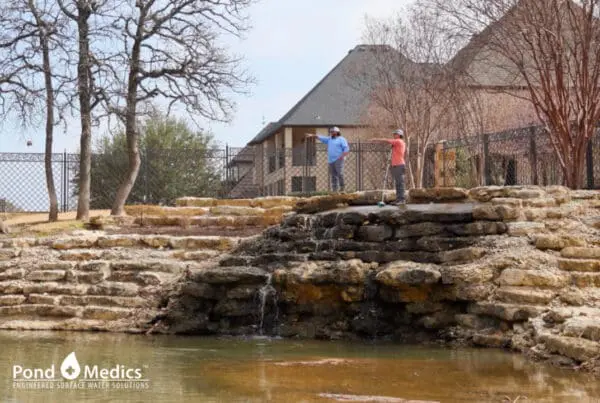
In private lake management, the dam carries the risk. When we look at a private dam we are looking for three things: whether there is still real sediment storage below the design pool, whether there is enough freeboard between the water surface and the top of the embankment, and whether the slopes still have the vegetative cover or rock protection that keeps wave action and runoff from taking them. Plenty of private dams were built without one of those. Plenty more have lost it over twenty years. That is our engineering position, not a rule of thumb, and on a dam of any size it is also a safety question, not just a maintenance one.
The shoreline goes where the traffic is. Repeated access at one point (a dock approach, a mowing line, a path down to the water) wears the bank down, and that worn section becomes an erosion point that widens with every rain. Controlling where traffic meets the water is one of the cheapest protections available and it is usually the first thing we recommend.
Sediment is the slow one. Every lake trades storage for soil washed in off the ground around it. A lake built to hold a certain volume may be holding meaningfully less today, with nobody the wiser until a dry summer or a heavy storm shows the difference. When enough has accumulated to matter, that is dredgeSMART, working from bathymetric survey data against the original design volume rather than a guess at how shallow it has gotten.
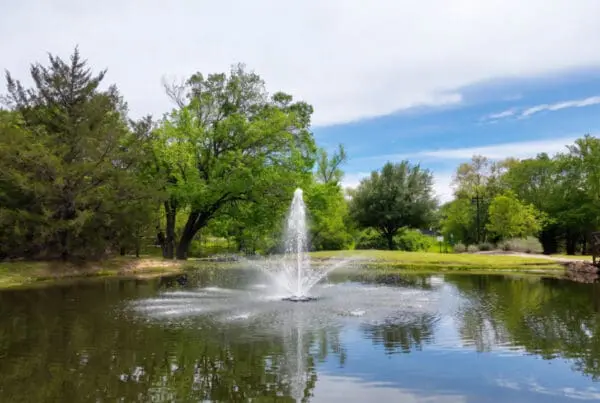
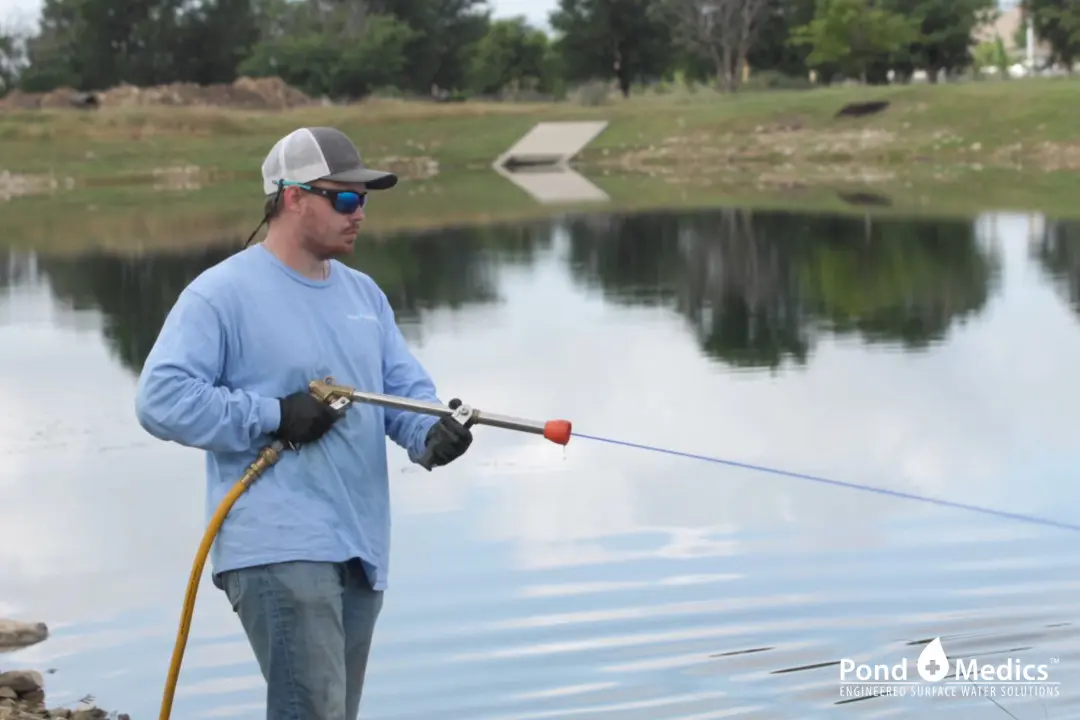
Water quality is its own discipline. If vegetation has taken over the shallows, or the lake goes low on oxygen through the summer and the fishery suffers, that is Simple Pond Care: subscription water-quality management with monitoring and reporting, treatment delivered precisely through AquaInject rather than applied by eye. Where the real gap is circulation and aeration, Fountain Freedom runs it as a service and you never buy the equipment.
And the structural repairs themselves (the dam, the spillway, the shoreline, the outlet) are PondCure, the reset button for construction and renovation on ponds, lakes, dams, spillways, channels and shorelines.
What it costs, honestly
There is no single number for private lakes. Differences in size, age and condition all impact the cost. Anyone who gives you an exact amount is guessing. What moves it: how big the water body is, how long it has gone without a structural review, whether erosion has already started into the bank, and how much storage has been lost against the original design depth.
What is consistent is the shape of the curve. A lake looked at on a cycle costs less over its life than one that gets attention after a spillway fails. Deferred maintenance on an embankment does not hold steady. It compounds, and it compounds fastest in the years nobody is looking.
So rather than a number that will not match your property, we give you a plan with a planning-level cost once we have been on your ground.
How we work a private lake
The same sequence every time. This is The PondMedics Way.
Listen. What are you actually seeing: the wet spot below the dam, the bank that keeps losing ground, the summer the fish struggled.
Innovate. Look past the symptom to what is driving it.
Propose. A plan built around your lake’s structure and how you actually use it, with a number you can plan against.
Deliver. Work done by people who engineer these systems, not a mowing and spraying crew.
Feedback. We ask what changed.
Follow-up. A lake changes with every season of rain and drought, so we stay on a cycle rather than waiting for the call.
Where the risk actually sits
The old model profits when your water struggles: something fails, someone invoices. We would rather carry the risk than bill it.
On ongoing water quality that means fixed monthly pricing under Simple Pond Care, with the operational risk on us. If we misjudge a season, that is our problem and not a change order. On aesthetic water patterns, it means Fountain Freedom’s promise in writing: no more than seven consecutive downtime days in a month, or we do not collect that month’s subscription.
The lake that never makes news
A well-managed private lake holds water through a drought, takes a heavy storm without the dam giving way, and keeps doing whatever you built it for. It does not look like anything in particular. That is the point.
If yours has not had a real structural review in a few years, start with an assessment: we walk the dam, the spillway and the shoreline, measure what storage you still have, and tell you what needs doing and what can wait. If the honest answer is that you have three good years before you need to spend money, we will tell you that too.
We bring life to surface water and the people it supports. Your success is our passion.
FAQs
How often should a private dam be inspected?
Once a year at minimum, and again after any major storm. Erosion, sediment movement and spillway blockages happen gradually and are easy to miss when you see the water every day. Depending on its height and storage, your dam may also fall under state dam safety jurisdiction, which is worth confirming.
How do I know if my lake has lost depth?
You cannot tell by looking, which is the problem. A bathymetric survey measures it against the original design volume and gives you an accrual rate, which turns an unknown into a number you can plan around.
Is managing a fishery different from managing the lake?
The structure comes first either way: capacity and a sound dam. A fishery adds depth variation, cover and summer oxygen, which is where aeration and ongoing water-quality management come in.