Invasive aquatic plant removal in Dallas ponds is not as simple as pulling weeds or spraying whatever product is on the shelf. The wrong approach – treating the wrong species, applying the wrong product, or removing too much at once – can do more damage to your pond than the plants themselves. So what actually works? The answer starts with correct identification and ends with a plan that keeps those plants from returning the moment conditions are right again.
We are PondMedics, a Dallas/Fort Worth-based boutique pond, lake, and surface water resource engineering, management, and consulting firm serving all of North Texas and the South Central U.S. – DFW’s resource for complete pond and lake care. Through our Aquatic Weeds service, we help property owners across DFW identify, treat, and manage invasive aquatic plant problems with solutions that are safe for fish, safe for the pond system, and built to last longer than one season.
Why Invasive Aquatic Plants Are a Serious Problem in DFW Ponds
Not every aquatic plant in a Dallas pond is a problem. Some native vegetation provides fish habitat, stabilizes shorelines, and contributes to a balanced ecosystem. The issue starts when non-native, invasive species enter the picture. These plants did not evolve alongside the local ecosystem, which means they have no natural checks on their growth. In North Texas’s warm climate, with long growing seasons and nutrient-rich storm runoff, they can spread with alarming speed.
Left unmanaged, invasive aquatic plants can:
-
- Block sunlight from reaching native vegetation and the organisms that depend on it
- Deplete dissolved oxygen as dense mats decompose, stressing or killing fish
- Clog inlets, outlets, and stormwater infrastructure, creating drainage and safety risks
- Restrict physical access to the water for maintenance, recreation, or inspection
- Crowd out native plant communities that took years to establish
In DFW ponds specifically, the combination of warm summers, shallow shorelines from sediment accumulation, and nutrient-rich runoff from developed land creates near-ideal conditions for invasive species to establish and spread rapidly.
What Invasive Aquatic Plants Are Most Common in Dallas Fort Worth Ponds?
Correct identification is the foundation of any effective invasive aquatic plant removal plan. Treating hydrilla the same way you treat giant salvinia, or applying a product suited for floating species to a submerged one, wastes time and money and often produces incomplete results.
Some of the most common invasive species we encounter in DFW ponds include:
-
- Giant salvinia – a fast-growing floating fern from South America that can double its coverage in about a week under favorable conditions, blocks sunlight, and severely depletes oxygen as it decomposes
- Hydrilla – a submerged invasive originally from Asia that grows up to an inch per day, reaches depths of up to 30 feet, and forms dense mats that choke out native plants and interfere with water flow
- Water hyacinth – a South American native with attractive flowers that masks a thick root mat underneath, spreads rapidly, and blocks light and circulation across large surface areas
- Alligatorweed – a South American emergent species that roots along the bank and spreads outward into the water, restricting shoreline access and contributing little ecological value to the pond
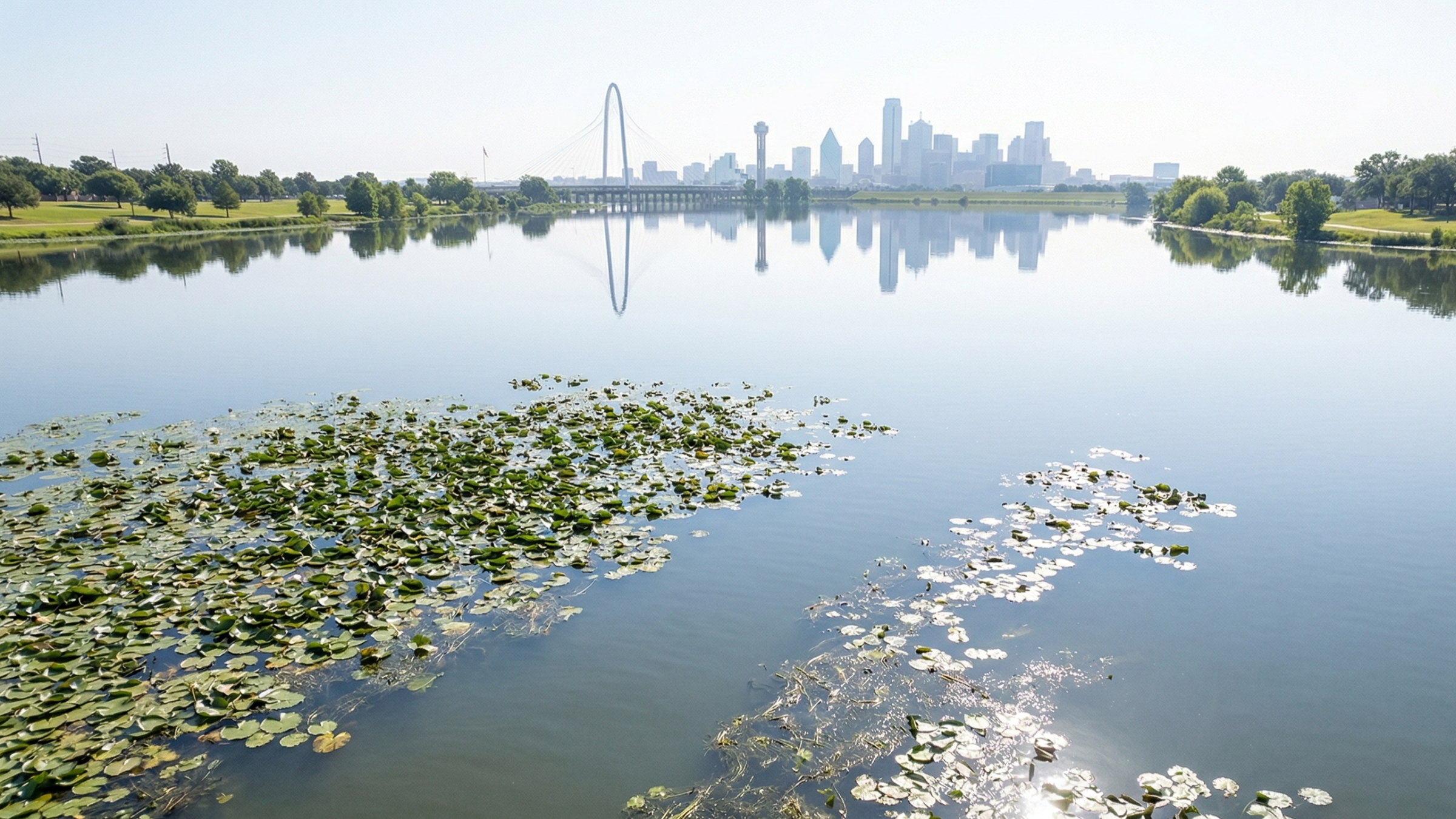
- Duckweed and watermeal – small floating species that can cover an entire pond surface quickly, cutting off oxygen exchange and sunlight penetration
Our Chief Operating Officer, Jarrod Conner, describes the early indicators that a problem is developing: “The earliest warning signs for problems can be sloughing, high sedimentation, islanding, and odors…” These are the signals that invasive growth has moved beyond a cosmetic concern and into something affecting the pond’s function. Each species calls for a different removal and management approach, which is why our Aquatic Weeds team identifies what is present before recommending any treatment.
What Is the Most Effective Method for Invasive Aquatic Plant Removal in Texas Ponds?
There is no single best method for invasive aquatic plant removal – the most effective approach depends on the species, the extent of coverage, the pond’s design, and how the water is used. In practice, the best results usually come from an integrated approach that combines tools rather than relying on any one method alone.
The primary options for invasive aquatic plant removal in Texas ponds include:
-
- Targeted aquatic herbicide applications – the most practical and efficient option for many DFW pond situations, using EPA-approved products selected specifically for the target species. Under Texas law, restricted-use herbicides require a licensed pesticide applicator with aquatic certification from the Texas Department of Agriculture – which is one reason professional treatment matters. Herbicide applications also need to be staged carefully on ponds with heavy coverage, treating sections at a time to avoid oxygen depletion as plant material decays
- Mechanical removal – physical cutting, raking, or skimming that removes plant material without chemicals. Useful for certain species and targeted areas, but labor-intensive and limited in scale. For fragmentation-prone species like hydrilla, mechanical removal can actually accelerate spread if not done carefully
- Circulation and aeration improvements – addressing the stagnant, nutrient-rich conditions that favor invasive growth in the first place. Through our Fountain Freedom brand, we provide fountains as a service for DFW pond owners, delivering reliable surface aeration and circulation that disrupts the still-water conditions many invasive species prefer – for a predictable monthly cost, without the equipment ownership burden
In our Aquatic Weeds work, we design treatment plans around the specific species present, the pond’s stormwater function, downstream considerations, and timing that minimizes stress on fish and desirable vegetation.
How Do You Stop Invasive Aquatic Plants From Coming Back After Treatment?
This is the question that matters most for long-term results – and the one that separates a one-season fix from a genuinely effective invasive aquatic plant removal strategy. Invasive species return when the underlying conditions that supported their growth have not changed.
Preventing reinvasion after treatment requires addressing several contributing factors:
-
- Nutrient loading – excess phosphorus and nitrogen from lawn runoff, storm drainage, and organic accumulation feed invasive growth. Reducing that nutrient load through consistent pond maintenance keeps treated areas from quickly reverting
- Sediment depth – shallow, sediment-filled zones create ideal rooting conditions for species like hydrilla and alligatorweed. When sediment has built up significantly, our DredgeSMART dredging program helps restore key depth zones that remove those rooting opportunities and improve overall pond circulation
- Consistent management – a single treatment rarely provides lasting control in a North Texas pond. Seasonal monitoring, early detection of new growth, and timely follow-up treatments are what keep invasive species from re-establishing before they become a full coverage problem again
Our Aquatic Weeds service is structured to be an ongoing partnership rather than a one-time visit, with scheduled inspections, treatment adjustments, and documentation of what is changing and why. That continuity is what makes the difference between a pond that is managed and a pond that is constantly in crisis.
When Invasive Plant Problems Signal a Bigger Issue
Invasive aquatic plant growth is sometimes the visible symptom of a deeper pond health problem. When the same species keeps returning despite consistent treatment, or when coverage is expanding faster than treatments can contain it, the pond may have an underlying issue driving the growth – typically excess nutrient loading, loss of depth from sediment accumulation, or poor circulation creating stagnant, warm zones where invasive species thrive.
As Jarrod puts it plainly: “We haven’t done anything over the last decade… That’s the most expensive sentence. Because the problems just compounded over that time.” That pattern plays out in DFW ponds more than most owners realize. What starts as a manageable invasive plant problem quietly compounds when treatments are skipped, warning signs are ignored, or underlying issues go unaddressed. When those drivers are present, invasive aquatic plant removal needs to be part of a broader Pond Issues conversation – because managing the plants without addressing the environment that supports them is a temporary solution at best.
If your Dallas or Fort Worth area pond is dealing with invasive aquatic plants that keep returning season after season, contact PondMedics today. Let DFW’s resource for complete pond and lake care design an invasive aquatic plant removal plan that fits your pond, your site, and your long-term goals.
FAQs About Invasive Aquatic Plant Removal in Dallas
1. Is it safe to swim or fish in a pond that has been treated for invasive aquatic plants?
It depends on the herbicide used and how it was applied. Many EPA-approved aquatic herbicides used in DFW ponds have no swimming or fishing restrictions when applied according to label instructions. Others may require a waiting period before water contact or use. At PondMedics, our licensed Aquatic Weeds team follows all Texas Department of Agriculture and EPA requirements and communicates any use restrictions clearly before and after treatment, so you always know the status of your pond.
2. Can I treat invasive aquatic plants in my Dallas pond myself?
For private ponds in Texas, a treatment proposal is not required from Texas Parks and Wildlife Department, but some herbicides – particularly those containing 2,4-D – require a pesticide applicator’s license with aquatic certification. Beyond the legal requirements, misidentifying the species or misapplying a product can result in incomplete control, fish stress from oxygen depletion, or harm to desirable native vegetation. For most DFW ponds, professional invasive aquatic plant removal is more effective and less risky than DIY approaches.
3. How quickly do invasive aquatic plants spread in North Texas ponds?
Faster than most pond owners expect. Giant salvinia can double its coverage in approximately one week under warm, nutrient-rich conditions – conditions that describe most DFW ponds in summer. Hydrilla can grow up to an inch per day. Water hyacinth spreads across open water surfaces rapidly once established. This speed is exactly why early identification and proactive management matter so much. By the time invasive coverage becomes unmistakable, the pond is already significantly harder and more expensive to treat.