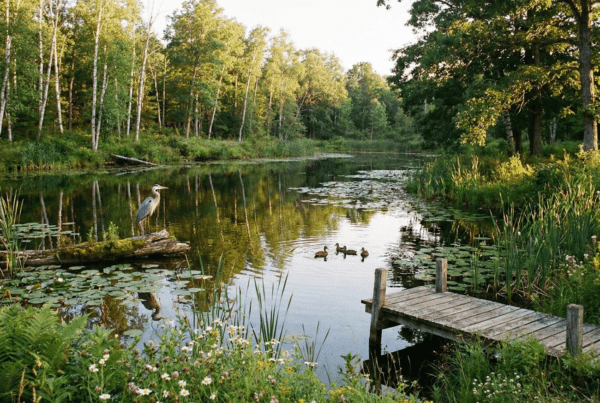

Stormwater ponds, also known as retention ponds or detention basins, are man-made structures designed to manage stormwater runoff. These ponds serve as temporary storage areas for rainwater and runoff from impervious surfaces such as roads, parking lots, and rooftops. These ponds are vital in managing runoff and are essential to effective stormwater management systems.
They serve multiple vital purposes that contribute to the overall health and well-being of communities and the environment. For example, stormwater ponds help to reduce the risk of flooding by acting as temporary storage areas for excess rainwater during extreme rainfall events. By capturing and holding stormwater runoff, they prevent overwhelming the drainage infrastructure and downstream water bodies. This minimizes the potential for property damage and protecting public safety. Properly maintaining your stormwater ponds ensures they can effectively remove pollutants from runoff.
Types of Ponds Used for Stormwater Management
Stormwater Retention Pond
One common type is the retention pond, designed to permanently hold a specific volume of stormwater runoff. These ponds typically have a permanent pool of water and are often landscaped with vegetation to enhance pollutant removal and aesthetic value.
Stormwater Detention Pond
Another type is the detention pond, designed to temporarily hold and slowly release stormwater runoff, helping to mitigate flooding by controlling the water flow rate. Detention ponds usually have an empty basin between storm events, and their design focuses on maximizing storage capacity.
Stormwater Wet Ponds
Wet ponds are similar to retention ponds. However, they are intentionally designed to have a permanent pool of water to promote pollutant treatment through biological processes.
Infiltration Ponds
There are also infiltration ponds, where stormwater runoff infiltrates the ground, aiding in groundwater recharge. These ponds have underlying permeable soils or engineered structures to facilitate water infiltration.
Each type of pond serves a specific purpose in managing stormwater runoff and plays a crucial role in effective stormwater management systems.
Stormwater Pond Design
Stormwater ponds are designed to capture and manage runoff by combining physical and biological processes. When rainfall occurs, inlet structures direct stormwater runoff from impervious surfaces into the pond. The pond’s design includes a storage area, typically with a depression or basin, which allows the water to collect and temporarily stay within the pond. The storage volume of the pond is designed to accommodate a certain amount of runoff to prevent flooding downstream.
As the stormwater runoff enters the pond, sediment and larger debris settle to the bottom due to the reduced flow velocity. This process, called sedimentation, helps to remove particulate matter and pollutants from the water. The settled sediment forms a layer at the bottom of the pond, reducing the transport of pollutants to downstream water bodies.
These ponds also incorporate vegetation, such as grasses, shrubs, and trees, and engineered structures like baffles and filter systems. These components contribute to pollutant removal through filtration and absorption. The vegetation and filtration systems help trap and filter pollutants, allowing the water to undergo natural treatment.
Common Problems With Stormwater Ponds

A number of issues can affect the functionality and effectiveness of stormwater ponds. One common issue is the accumulation of sediment and debris within the pond. Over time, sediment carried by stormwater runoff can build up, reducing the pond’s storage capacity and pollutant removal efficiency. This requires regular maintenance, including sediment removal and debris clearing, to ensure optimal performance.
Another problem is the proliferation of invasive plant species within the pond, which can outcompete native vegetation and hinder the pond’s ability to filter pollutants effectively. Controlling and managing vegetation through regular inspections and appropriate vegetation management practices are necessary to maintain the pond’s functionality.
Erosion can occur on the pond’s slopes or banks, compromising their stability and potentially leading to sedimentation and clogging of the pond. Proper erosion control measures, such as using erosion-resistant materials and vegetation, are essential to address this issue.
Inadequate design or construction can result in structural problems such as leaks, uneven settling, or failure of inlet and outlet structures. Regular inspections and timely repairs are necessary to address these issues and ensure the proper functioning of the pond.
Best Practices for Maintaining Stormwater Ponds
Regular maintenance and adherence to the following practices can help maximize the performance of your stormwater ponds.
Inspection and Monitoring
Conduct routine inspections to identify any issues or changes in the pond’s condition. Monitor water levels, vegetation health, and the presence of sediment or debris.
Sediment and Debris Removal
Regularly remove accumulated sediment and debris from the pond to maintain its storage capacity and pollutant removal efficiency. This can involve dredging or vacuuming residue and clearing out vegetation or debris.
Vegetation Management
Control vegetation growth within the pond to prevent overgrowth and maintain proper pollutant filtering. This includes removing invasive species, trimming vegetation, and ensuring a healthy mix of native plants.
Erosion Control
Implement erosion control measures on the pond’s slopes and banks to prevent erosion and maintain stability. Use erosion-resistant materials, such as geotextiles or riprap, and establish appropriate vegetation cover to reduce the potential for erosion.
Compliance and Regulations
Federal, state, and local regulations govern stormwater management and impose compliance and reporting requirements for stormwater ponds. These regulations aim to protect water quality, prevent pollution, and effectively manage stormwater runoff. Non-compliance with these regulations can lead to penalties and legal consequences. At the federal level, the Clean Water Act (CWA) establishes the framework for regulating stormwater discharges through the National Pollutant Discharge Elimination System (NPDES) program.
Under the NPDES program, stormwater permits are required for certain point source discharges, including those from municipal separate storm sewer systems (MS4s) and industrial facilities. These permits set specific requirements for stormwater management, including the maintenance and operation of stormwater ponds.
State and local governments often have additional regulations and permitting programs in place to address stormwater management. These regulations can vary widely depending on the region and specific circumstances. They may include requirements for the design, construction, and maintenance of these ponds and reporting obligations.
Well-Maintained Stormwater Ponds Protect Your Property and Community
Keeping your stormwater ponds in good condition is crucial for the environment and the community. Well-maintained ponds effectively manage stormwater runoff, reducing flooding risks and protecting water quality by removing pollutants. To ensure optimal pond management, contact PondMedics!
FAQs About Stormwater Ponds
1. What is the difference between a retention pond and a detention pond? Retention ponds hold a permanent pool of water and are designed to store stormwater long-term, allowing pollutants to settle and water to slowly infiltrate or evaporate. Detention ponds, on the other hand, are typically dry between storm events and are designed to temporarily hold large volumes of runoff and release it slowly to reduce downstream flooding. Both types of stormwater ponds serve important roles but require different maintenance approaches.
2. How often do stormwater ponds need to be maintained? At a minimum, stormwater ponds should be inspected twice a year and after any significant storm event. Routine maintenance tasks including vegetation management, debris removal, and erosion monitoring should be performed on a regular schedule. Sediment removal through dredging is typically needed less frequently but becomes necessary when buildup starts to reduce the pond’s storage capacity or pollutant removal efficiency.
3. What regulations apply to stormwater ponds? Stormwater ponds are subject to federal, state, and local regulations. At the federal level, the Clean Water Act and the NPDES permit program establish baseline requirements for stormwater management. State and local governments often layer additional requirements on top of these, covering design, construction, maintenance, and reporting. Property owners and managers should be familiar with the specific requirements in their jurisdiction to avoid penalties and ensure their ponds remain compliant.