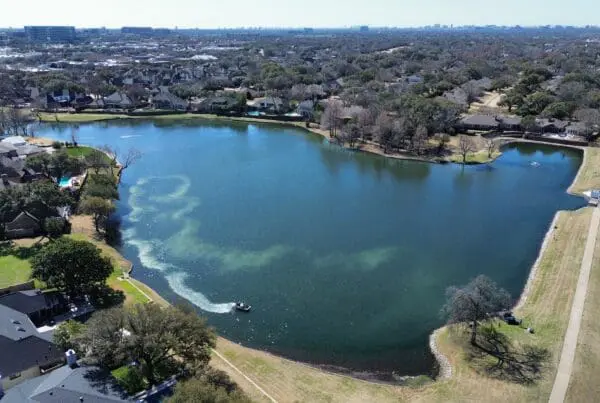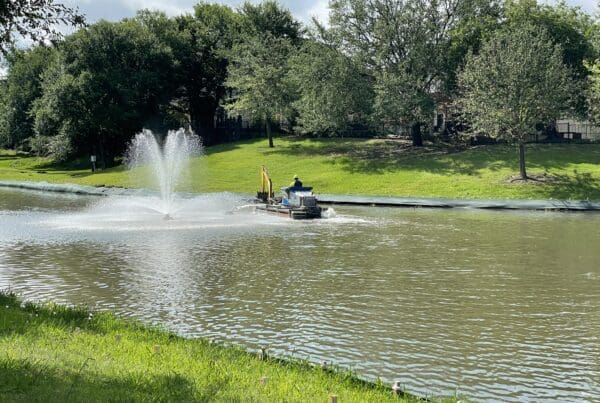
It starts in an inbox. A resident forwards photos of green water. A board member gets stopped at the mailbox. A property manager writes the third email of the summer explaining why the amenity everyone loved at closing now smells in July.
Here is the thing worth noticing: a retention pond that is working the way it was engineered does not generate repeat complaints. One that has an underlying water-quality or structural problem generates them on a schedule, every time the heat sets in, every time a storm rolls through.
So the complaints are not the problem. They are the data.
A pattern of resident complaints is almost never random. Treating it as a punch list, mow here, treat there, patch that bank, keeps residents quiet for a few weeks and solves nothing, because it treats data about the pond’s condition as a list of chores.
Two Kinds Of Complaint, Two Very Different Answers
Almost every complaint that falls under the umbrella of HOA pond complaints in DFW breaks into one of two buckets, and telling them apart is most of the work.
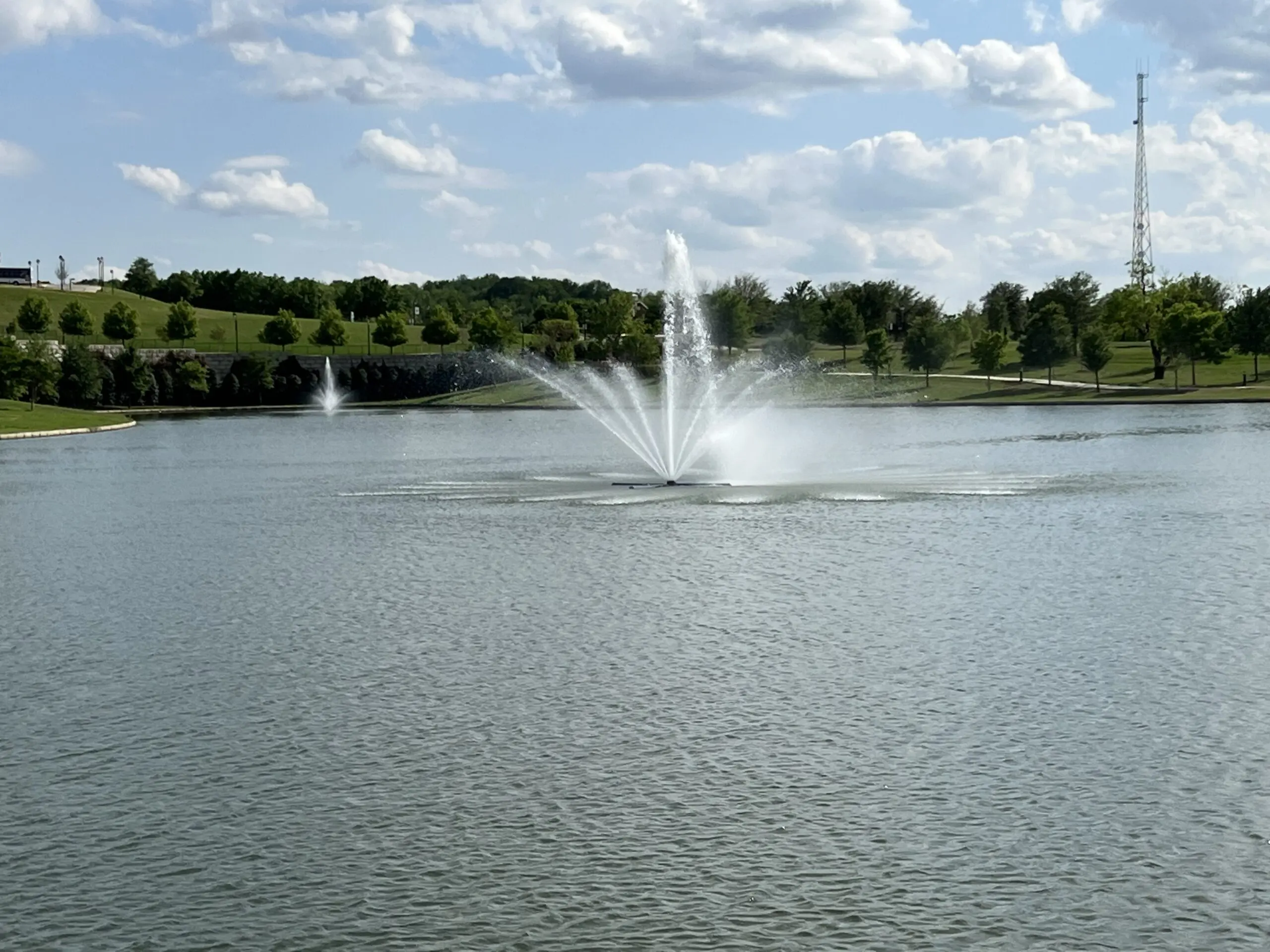
Water-quality complaints. Green water, odor, surface scum, matted vegetation along the bank, cloudy water, dead fish after a hot spell. These are biology and oxygen problems. In North Texas, long hot summers stratify a pond: warm water sits on top of cold, the bottom goes oxygen-poor, nutrients release from the sediment, and algae does what algae does. This is what Simple Pond Care exists for: subscription water-quality management with monitoring and reporting, where treatment is delivered precisely through AquaInject rather than guessed at from the back of a truck. Where circulation and aeration are the real gap, Fountain Freedom handles it as a service, you never buy the equipment.
Structural complaints. A bank sloughing toward a walking trail. Standing water that will not drain between storms. A pond that visibly overtops in a heavy rain. An outlet structure that no longer moves what it was built to move. These are engineering problems, and this is PondCure, the reset button for construction and renovation of ponds, lakes, dams, spillways, channels and shorelines. And when a pond has lost so much depth to sediment that it cannot hold the storage it was designed for, that is dredgeSMART, working from bathymetric survey data rather than guesswork.
Boards get into trouble when they treat a structural complaint as a water-quality complaint. You can treat algae all summer in a pond whose real problem is that it is four feet shallower than it was built to be.
One Honest Note On Fish Kills
A fish kill after a storm is frightening and it generates more resident email than anything else on this list. It is almost never caused by one thing. Heavy rain mixes a stratified pond, pushing oxygen-poor bottom water up through the column, and fish run out of oxygen in hours.
Which means a fish kill is usually telling you the pond was under-aerated before the storm. The storm did not cause it. The storm revealed it.
Who Is Actually Responsible, And Where It Is Written Down
This is where most boards discover they have been operating on an assumption about HOA pond complaints in DFW and who is actually on the hook.
In most Texas communities, a pond built as part of the original development is the association’s to maintain, not the city’s. But the duty usually does not come from where boards expect. It comes from the recorded plat: the drainage and detention easements dedicated on it, and the easement language that goes with them, which in most DFW cities says plainly that the city will not maintain the easement and the owners will. That document is at the county. It was recorded before most of your board moved in, and it runs with the property.
A few cities differ, and it is worth knowing which one you are in. Fort Worth requires a separately recorded Stormwater Facility Maintenance Agreement for facilities the city will not maintain, and it names HOAs and POAs specifically. Dallas goes the other way: its development code puts routine maintenance on adjoining owners but keeps the city responsible for major maintenance and repair necessary for public safety and welfare.
Your declaration matters too, and some older developments carry a Developer’s Agreement that assigned pond and drainage maintenance to the developer with the obligation passing to the association later. Boards that have never located that document are often surprised by what they are carrying.
One caution on the legal framing, because it gets repeated loosely: Texas Water Code §11.086 prohibits diverting or impounding the natural flow of surface water in a manner that damages another’s property by the overflow of the water diverted or impounded. That is a real exposure if your pond is overtopping onto a neighboring property. It is not a general statute about erosion, and it is not triggered simply because a pond is in poor condition. Ask your association’s attorney what applies to your community rather than relying on a blog post, including this one.
What A Board Should Actually Do
Stop answering HOA pond complaints one at a time and read them as a set. Where are they coming from, what season, after what weather? That pattern will tell you whether you have a biology problem or a structure problem before anyone gets in a truck.
Then work the problem in order. This is The PondMedics Way, and we run it the same way every time.
- Listen. We sit down with the board or manager and go through what residents are actually reporting, and when.
- Innovate. We look past the symptom to the design and condition of the pond itself.
- Propose. We put up a plan that addresses the cause, with a planning-level cost you can take to a budget meeting.
- Deliver. The work is done by people who engineer these systems, not by people who treat them like landscaping.
- Feedback. We ask what changed, from the board and from the residents who were complaining.
- Follow-up. A pond changes with the seasons, so we stay on a schedule. Boards that hear from us on a cadence stop being surprised at open meetings.
Why We Are Willing To Put It In Writing
The old pond-care model profits from failure. Algae comes back, another treatment gets invoiced. The fountain goes down, another repair gets billed. The worse your pond performs, the better the vendor’s year.
We think that is backwards, so we moved the risk.
Fountain Freedom is a subscription, not a purchase, you never buy the equipment, and the units are telemetry-monitored, so we often know a fountain is failing before anyone at the community does. The promise is in writing: if your fountain is down more than seven days in one month, you do not pay for that month’s service. We keep water in the air, or you do not pay.
Simple Pond Care works the same way: fixed monthly pricing, predictable budgeting, and the operational risk sitting with us instead of with your board. If we misjudge the season, that is our problem, not a change order.
What It Looks Like When It Is Working
This is the part that gets left out of articles like this one, and it is the reason any of it matters.
A pond that has been sorted out stops being an agenda item. The water clears. The smell goes. The bank holds where it meets the trail. Herons come back, and so do the turtles the kids stop to look at on the way to the pool. The board spends its meetings on the things it actually wanted to work on.
Most boards are not trying to become pond experts. They are trying to stop worrying about the next email.
Where To Start
If your community is fielding the same complaints season after season, start with a pond condition assessment: we read the complaint pattern, look at the structure and the water, tell you which of the two you actually have, and give you a planning-level number you can put in next year’s budget. If the honest answer is that you have three good years before capital is needed, we will tell you that too.
We bring life to surface water and the people it supports. Your success is our passion. Contact PondMedics today to get started.
FAQs
Our pond looks fine most of the year but generates complaints every summer. Is that normal?
Common, yes. Minor, not necessarily. Heat stratifies a pond and drives oxygen down, which is when problems that were invisible in cooler months become obvious. If the same complaint returns every summer, something structural or biological is driving it and a seasonal treatment will not resolve it on its own.
Can our HOA get in legal trouble for ignoring pond complaints?
Possibly, but be careful with the legal shorthand. Texas Water Code §11.086 creates exposure where water you impound overflows and damages someone else’s property. Separately, your recorded declaration and the drainage easements on your plat may obligate the association to maintain the pond, and sustained inaction on a known defect is the kind of thing that gets raised later. Chapter 209 of the Property Code, which is sometimes cited here, governs association procedure, it is not the source of a maintenance duty. Ask your attorney about your community specifically.
How is this different from a landscaping company?
A landscape contractor can mow, treat and tidy the area around a pond. What they generally cannot do is tell you why the pond is failing: whether the outlet is undersized, whether the pond has lost storage to sediment, whether the fish kill was really an aeration problem. We are an engineering-led firm, and the assessment comes first.
Who is responsible for pond maintenance in an HOA, the board, the city, or the developer?
In most DFW communities, the association, through the recorded plat and its drainage easements plus the declaration. Some developments start with a Developer’s Agreement that later passes to the association. And a few cities differ: Fort Worth requires a recorded maintenance agreement, while Dallas retains major repair on detention easements. Pull your plat before you budget.