Pond Algae Control is one of the most common reasons Texas pond owners call us. Why does your pond suddenly turn green or scummy just when you want to enjoy it? In most cases, the problem is not that your pond is “bad.” It is that heat, nutrients, and poor circulation are lining up perfectly for algae in our Texas climate, and that is something we can fix.
At PondMedics, we fix water. From our home base in the DFW area, we manage ponds and lakes across North Texas and the broader South Central U.S., using engineering grade tools and a family of brands dedicated to surface water solutions.
In this pond algae control guide, we will walk through why algae shows up, how we safely get it under control, and the long term steps that help keep your Texas pond clear without turning it into a full time job.
What Actually Causes Pond Algae In Texas?
If your pond seems to explode with algae every spring or summer, you are not imagining it. Warm, sunny, slow moving water rich in nutrients is exactly what most nuisance algae species want. Texas delivers all of that in abundance.
The most common drivers we see in North Texas ponds include:
- Excess nutrients. Fertilizer, grass clippings, livestock manure, fish feed, and decaying leaves wash into the pond and load it with nitrogen and phosphorus.
- Shallow, sunlit shorelines. Ponds with large areas less than 2 feet deep allow sunlight to hit the bottom, which encourages filamentous algae mats.
- Low circulation and low oxygen. Stagnant water lets algae dominate while beneficial microbes and fish struggle, especially during hot, still weather.
- Unbalanced biology. Too few plants or the wrong mix of fish can leave a lot of “unused” nutrients that algae happily consume.
When these conditions stack up, you will see either:
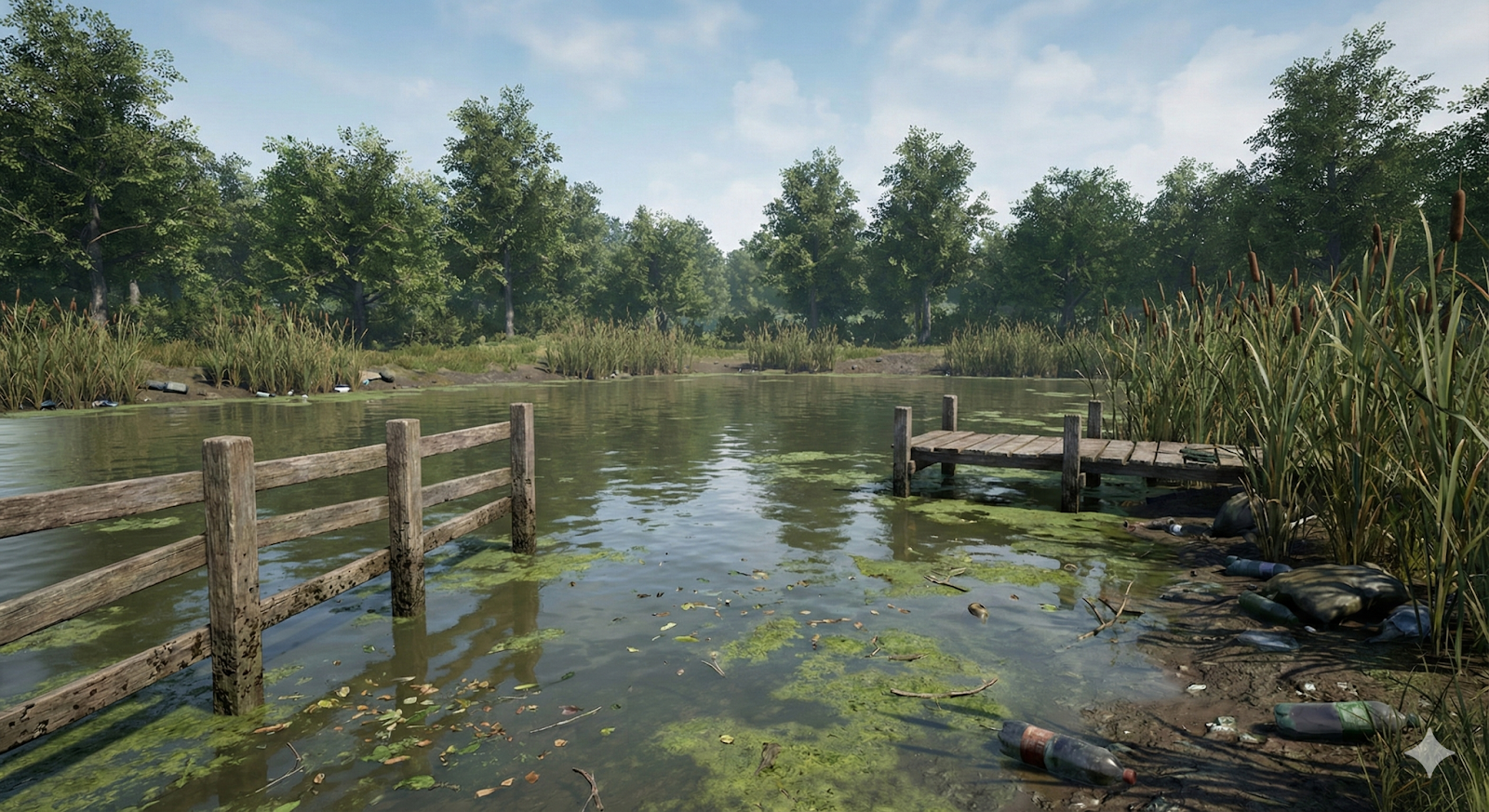
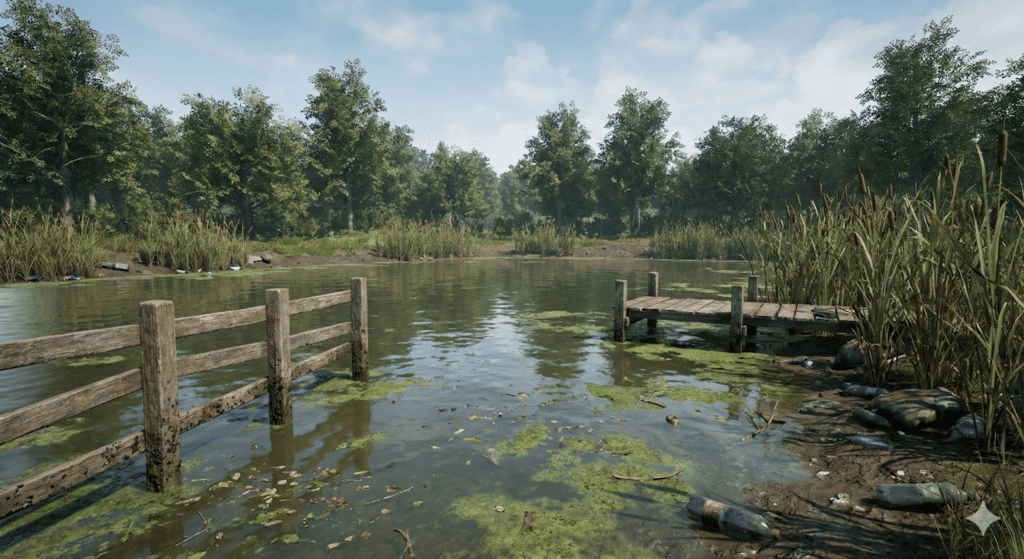
- Green “pea soup” water from microscopic planktonic algae.
- Stringy or mat forming algae that starts on the bottom and floats up.
- Blue green scums from cyanobacteria, which can sometimes be toxic.
You don’t have to know which type you have to call us, but identifying it helps us pick the safest and most effective solution.
Is Pond Algae Dangerous For Fish, Livestock, Or Pets?
A little algae is normal in any healthy pond. The concern is when a bloom gets thick, smells bad, or forms blue green streaks or paint like scum on the surface. Those can be signs of cyanobacteria, often called blue green algae, which can produce toxins that harm pets, livestock, wildlife, and people.
In Texas, harmful algal blooms tend to show up when:
- Water is warm and shallow.
- There is lots of nutrient runoff after rain.
- The pond is calm with very little circulation.
If you notice:
- Sudden fish kills
- Strong “musty” or sewage like odors
- Dogs or livestock avoiding the water, or getting sick after contact
Keep people and animals out of the pond and contact a professional.
When we assess a pond with a suspected harmful bloom, we focus on:
- Identifying whether cyanobacteria are present.
- Checking how fish, livestock, or pets use the water.
- Designing a treatment plan that protects both the pond and the animals that rely on it.
Our Pond Algae Control Process In North Texas
Our Pond Algae Control work is part of the “Aquatic Weeds” and “Pond Issues” services our team provides across DFW and North Texas. We treat algae as a symptom of how your pond is built, used, and maintained, not just something to “spray and pray.”
Step 1: Diagnose The Root Cause
We start with questions and data:
- How deep is the pond and how is it shaped?
- What flows in and out?
- Are there fish, livestock, or irrigation withdrawals?
- What does the water chemistry look like over time?
Because we are a Texas registered civil engineering firm for surface water, we can pair on the ground observations with mapping, depth surveys, and water quality testing where needed.
This tells us whether nutrients, circulation, design, or biology are doing most of the damage.
Step 2: Targeted Treatment To Get Algae Under Control
When a pond is already covered in algae, we often need a short term treatment to knock it back. That might include:
- Selective algaecides applied at the right dose and in the right zones.
- Spot treating shoreline mats instead of blanketing the entire pond.
- Timing treatments to avoid hot afternoons or low oxygen events that can stress fish.
We never recommend dumping household chemicals into a pond. Products that seem cheap or easy, like bleach or misused copper, can cause fish kills, long term water quality issues, and regulatory headaches.
Our goal is simple: clear the water without trading one problem for three new ones.
Step 3: Fix The Conditions That Keep Growing Algae
Short term treatment buys time. Long term success comes from fixing the conditions that feed algae in the first place. That can include:
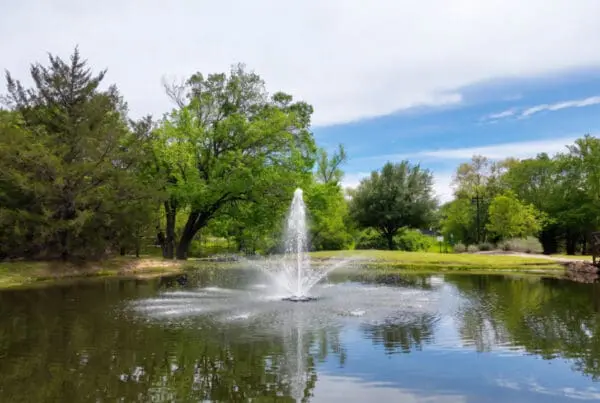
- Improving circulation and oxygen. For ponds that would benefit from fountain installation, we often recommend our Fountain Freedom brand, which provides fountains as a service and handles the ongoing maintenance that keeps those systems running and looking great.
- Managing nutrient loading. That means reducing runoff from fertilized areas, adjusting fish feeding practices, and sometimes using beneficial bacteria or dyes as part of a broader plan.
- Removing nutrient rich sediment. In older ponds with heavy muck build up, chronic algae is often a sign that it is time to dredge. Through our DredgeSMART service, we design and manage dredging projects to remove sediment efficiently and restore the pond to a more sustainable depth and shape.
All of this fits inside the PondMedics family of brands, created specifically to solve surface water problems for communities, HOAs, private landowners, and municipalities across the DFW region and beyond.
How To Prevent Algae In Your North Texas Pond
Once we have your pond under control, prevention becomes a lot more manageable. For most DFW and North Texas ponds, these habits make the biggest difference:
- Control what washes in. Keep fertilizers, animal waste, and grass clippings from running directly into the pond. Small changes to how you mow, feed, and manage animals can cut nutrient loading dramatically.
- Maintain steady circulation. Properly sized aeration or fountains, serviced through Fountain Freedom, help keep oxygen levels more stable and make it harder for algae to dominate.
- Watch depth over time. Sediment quietly reduces average depth, which increases temperature, concentrates nutrients, and favors algae. Periodic depth checks help you know when to bring in DredgeSMART for a data driven dredging plan instead of waiting for the pond to nearly fill in.
- Monitor, do not ignore. A little green tint might be healthy plankton that feeds your fishery. Sudden changes in color, odor, or clarity are worth a call before they become emergencies.
Prevention is less exciting than a dramatic before and after photo, but over the life of a pond in Texas it saves far more money and stress than emergency cleanups.
When Should You Call A Pond Algae Professional?
Many Texas pond owners try to manage algae on their own at first. That can work for small, simple ponds, but there are clear signs it is time to bring in help:
- The pond turns green or scummy every year despite your efforts.
- You are worried about fish kills, livestock health, or family and pet safety.
- The pond is part of an HOA, neighborhood, or commercial property where appearance and liability matter.
- Algae mats are so thick that they limit fishing, boating, or irrigation.
When you reach that point, you do not just need a product. You need a plan. That is where our combination of engineering, pond management, Fountain Freedom\, and DredgeSMART services gives North Texas owners a single, coordinated path from “problem pond” to reliable asset.
Pond Algae Control: Clear Water Starts With Understanding Your Pond
Algae is not a moral failing of your pond. It is a natural response to the way your waterbody is built and used in a hot, nutrient rich Texas environment. When we approach it as an engineering and management problem instead of a one time chore, the path forward becomes much clearer.
If your pond or lake in Dallas, Fort Worth, or anywhere in North Texas is struggling with algae, we would be glad to help you sort out both the quick wins and the long term fixes. Contact PondMedics today to talk through your pond, your goals, and how our team can design a solution that keeps your water clear, healthy, and working for you.
Frequently Asked Questions About Pond Algae Control In Texas
1. What is the fastest way to clear algae from my Texas pond?
The quickest approach is usually a targeted algaecide treatment combined with physical removal of thick mats in high use areas. The safest plan depends on your fish, animals, and water uses, which is why we start with a site specific evaluation instead of a one size fits all product. From there we pair short term treatment with circulation and nutrient strategies so the algae does not bounce right back.
2. Will PondMedics’ pond algae control hurt my fish or livestock?
Our goal is to protect the health of your pond and everything that depends on it. When we design a treatment plan, we account for fish species, stocking density, livestock access, and water uses like irrigation or recreation. We avoid harsh DIY shortcuts and time treatments to minimize oxygen stress, especially during hot North Texas weather, so your pond becomes healthier instead of just looking better for a week.
3. Can you help with ponds outside the immediate DFW suburbs?
Yes. PondMedics is headquartered in Prosper and serves ponds and lakes across Dallas, Fort Worth, the surrounding suburbs such as Frisco, Plano, McKinney, Celina, Coppell, Denton, and communities throughout North Texas and the South Central U.S. If your pond falls in this region and you are dealing with algae, we can match you with the right combination of Pond Issues, Aquatic Weeds, Fountain Freedom, or DredgeSMART services to get it back on track.