A tranquil pond is a beautiful addition to any landscape, providing a haven for wildlife, enhancing property values, and offering a peaceful retreat. However, the allure of a pond can quickly fade if its banks become eroded and unstable. Pond bank stabilization is crucial for maintaining a healthy and attractive pond, protecting it from the damaging effects of erosion.
Pond bank erosion is a common problem that can be caused by a variety of factors, both natural and human-induced. Natural factors include wave action, fluctuating water levels, and runoff from rainfall. Human activities like foot traffic, livestock grazing, and improper landscaping can also contribute to erosion. The consequences of unchecked erosion can be severe, including the loss of valuable land, decreased water quality, and damage to aquatic habitats. Read on to learn more about all of this.

Common Causes of Pond Bank Erosion
Nature itself can be a formidable force when it comes to pond bank erosion. The constant lapping of waves, especially in windy conditions or areas with heavy boat traffic, can gradually wear away at the shoreline. Fluctuating water levels, caused by seasonal changes or rainfall patterns, can further destabilize the banks, particularly in areas with loose or sandy soil. Heavy rainfall and runoff can also carry away soil, leaving the banks vulnerable to further erosion.
Human activities can unintentionally exacerbate erosion problems. Foot traffic, especially along well-worn paths, can compact the soil and damage protective vegetation. Livestock grazing can have a similar effect, leading to bare patches that are easily eroded. Improper landscaping practices, such as removing native vegetation or planting invasive species, can also weaken the natural protection against erosion. Poor drainage systems can also water pool and saturate the soil, making it more susceptible to erosion.
Assessing Your Pond Bank Stabilization Needs
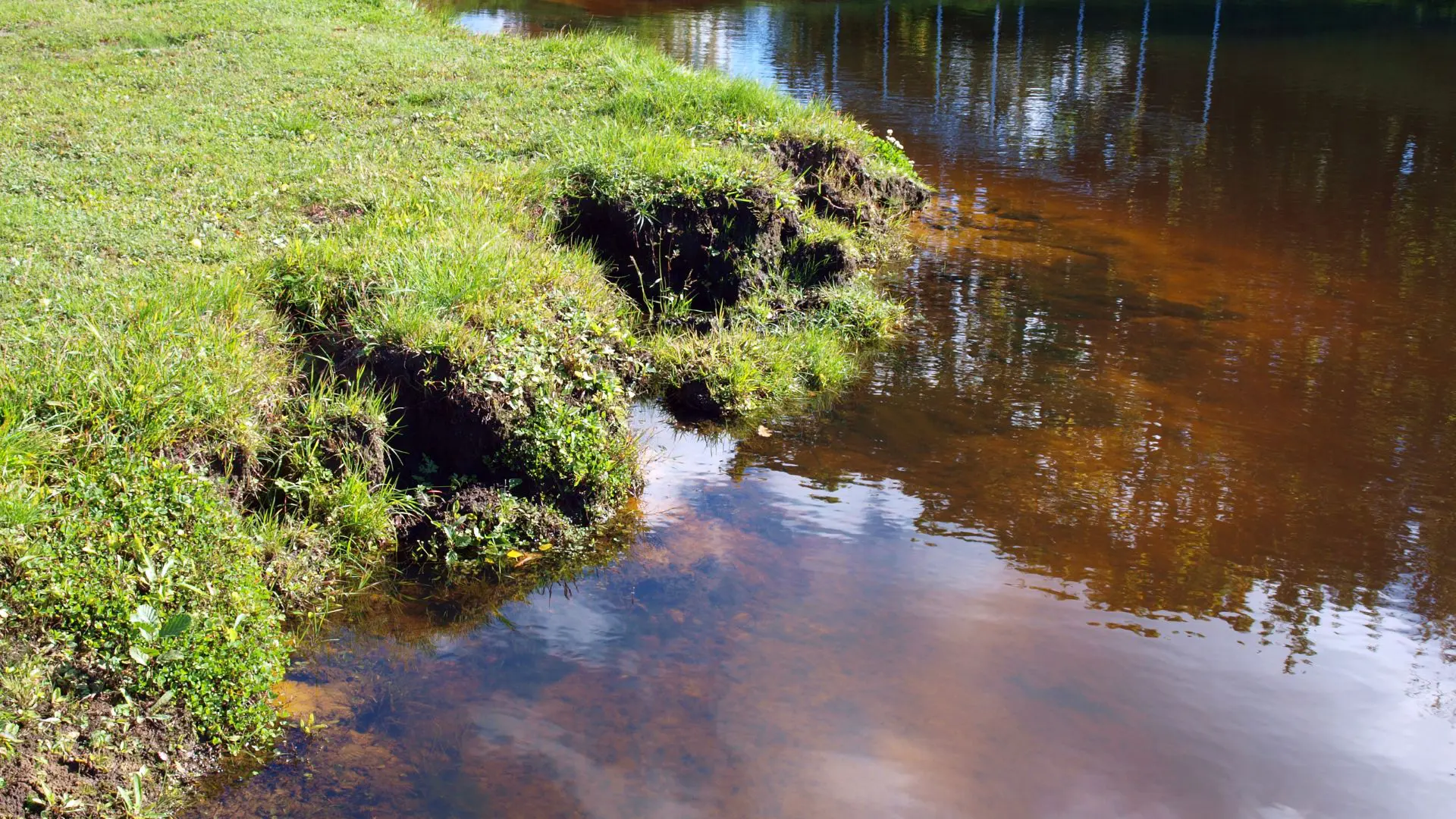
Recognizing the signs of erosion is the first step towards effective pond bank stabilization. A visual inspection can reveal telltale signs like exposed tree roots, slumping soil, and undercut banks. Water quality testing can determine whether erosion is contributing to excess sediment or nutrient levels in the pond. Soil testing can identify the type and stability of the soil, guiding the selection of appropriate stabilization methods.
For a comprehensive assessment and tailored solutions, it’s wise to consult with pond experts like PondMedics. Our experienced professionals can evaluate the severity of erosion, identify the root causes, and recommend the most effective stabilization strategies for your specific pond. We take into account factors such as budget, aesthetics, and environmental impact to develop a customized plan that meets your unique needs.
Pond Bank Stabilization Techniques
A variety of pond bank stabilization techniques are available, each with its advantages and best-use scenarios:
- Natural Solutions: These methods harness the power of nature to stabilize banks. Planting native vegetation with deep root systems is a highly effective way to reinforce soil and prevent erosion. Bioengineering techniques, such as live staking, coir logs (made from coconut fiber), and branch layering, use natural materials to create living barriers against erosion.
- Hard Armor Solutions: When immediate protection is needed, or in areas with high wave energy, hard armor solutions like riprap (large rocks) or gabions (wire cages filled with rocks) can be used. These structures provide a durable and effective barrier against erosion but may be less aesthetically pleasing than natural solutions.
- Hybrid Approaches: Combining natural and hard armor elements can offer the best of both worlds. For example, planting vegetation in front of a riprap wall can soften its appearance while providing additional erosion control benefits.
Maintaining Stable Pond Banks
Once your pond banks are stabilized, ongoing maintenance is essential to ensure their long-term health. Regular inspections are crucial to catch any signs of new erosion or damage to existing structures. Vegetation management, including pruning, weed control, and replanting, is also necessary to maintain a healthy and protective vegetative buffer.
If you’ve installed hard armor solutions like riprap or gabions, periodic maintenance is required to ensure they remain intact and effective. This may involve repositioning displaced rocks or repairing damaged wire cages.
Pond Bank Stabilization Can Protect Your Investment
Pond bank stabilization is an investment in the long-term health and beauty of your pond. By addressing erosion issues promptly and implementing appropriate stabilization measures, you can protect your property, enhance water quality, and create a thriving ecosystem.Don’t wait for erosion to run its course. Contact PondMedics today for an assessment and consultation. Our team of experts will develop a customized stabilization plan tailored to your specific needs and budget. Invest in your pond’s future and enjoy its natural beauty for years to come.