Our pond habitat improvement guide is for owners who feel like their pond looks “okay” on the surface, but fish health and water clarity still are not where they should be. Is the problem really habitat, and can simple upgrades fix it? In many DFW ponds, the answer is yes. Small, targeted habitat changes can dramatically improve water quality and fish health when they are part of a bigger plan, not random one-off projects.
We are PondMedics, a Dallas/Fort Worth based boutique pond, lake, and surface water resource engineering, management, and consulting firm serving all of North Texas and the South Central U.S. as DFW’s resource for complete pond and lake care. Through our Pond Issues and Aquatic Weeds services, we help owners turn “stressed” ponds into healthier systems with better habitat and more resilient fish populations.
Why Habitat Is Usually The Missing Piece
Many pond owners in DFW try to solve every problem with chemicals, new fish, or bigger equipment. When those fixes do not last, it is usually because the pond habitat itself is working against them.
When we talk about pond habitat improvement, we mean the physical and biological parts of your pond that fish and beneficial organisms need to thrive:
- Adequate depth and temperature refuge
- Reliable circulation and oxygen
- Places to feed, hide, and spawn
- A balance between open water and plant growth
If any of these pieces are out of balance, fish struggle, water quality declines, and every summer becomes a stressful guessing game. A practical pond habitat improvement guide focuses on restoring that balance with simple, durable upgrades.
Core Principles In Any Pond Habitat Improvement Guide
Before you add anything new to the pond, it helps to think about a few simple principles that guide our work in DFW:
- Protect function first.
Habitat upgrades should never compromise drainage, detention capacity, or dam safety. We always start by verifying that your pond can still do the job it was designed for. - Think systems, not decorations.
A good pond habitat improvement plan treats the pond as a living system. Every change should support circulation, oxygen, and fish behavior, not just appearance. - Aim for “low drama” management.
We focus on upgrades that require minimal day to day attention once they are in place, so you are not adding new headaches.
These principles shape the simple pond habitat improvement steps we recommend most often.
Simple Depth And Structure Upgrades For Better Habitat
Many DFW ponds slowly lose depth as sediment accumulates. Shallow, uniform ponds heat up quickly, stress fish, and allow nuisance plants to take over. In our Pond Issues and Dredging Help work, we see this pattern constantly.
Here are straightforward ways to improve habitat through depth and structure.
1. Restore Key Depth Zones
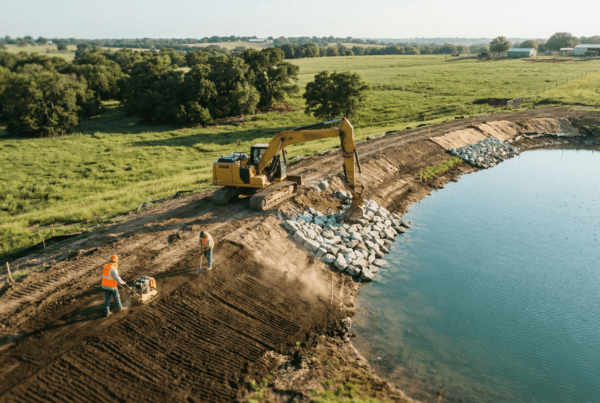
You do not always need a full dredging project to see habitat benefits, but when sediment has significantly reduced depth and storage, our DredgeSMART brand becomes part of the solution.
Targeted depth improvements can:
- Create deeper refuge areas where fish can escape extreme summer heat
- Reestablish gradual slopes instead of flat, shallow shelves
- Improve circulation and reduce stagnant corners
A thoughtful pond habitat improvement plan often starts with a question: “Do we still have the depth this pond was designed for?” If the answer is no, DredgeSMART helps you develop a sediment removal plan that restores that design in the most budget friendly way.
2. Add Smart In-Water Structure
Fish need places to rest, feed, and hide from predators. Instead of random objects tossed into the pond, we plan structure as part of a pond habitat improvement guide:
- Clusters of safe, durable structure in areas with adequate depth
- Placement that does not interfere with outlets or inspection access
- Designs that help break up wind and current to create more “micro habitats”
Our Pond Issues service looks at structure through both an engineering and fisheries lens so you get habitat value without creating future maintenance problems.
Using Circulation And Aeration To Improve Habitat
Healthy habitat is not just about where fish can hide. It is about how water moves and where oxygen is available.
3. Circulation As A Habitat Tool
Poor circulation leads to warm, stagnant zones that stress fish and concentrate nutrients. As part of our pond habitat improvement work, we look at how water flows through your pond:
- Do inlets and outlets promote movement, or does water short circuit?
- Are there sheltered coves with little mixing?
- Does the pond stratify in summer, leaving low oxygen at depth?
Sometimes small operational changes resolve these issues. In other cases, upgrades to aeration or fountains are the most effective pond habitat improvement.
4. Fountain Freedom For Stable Oxygen And Fish Health
When fountains and aeration systems are part of your habitat strategy, reliability matters. A fountain that runs sometimes is not much help during a long DFW heat wave.
That is why we created our Fountain Freedom brand. Fountain Freedom provides fountains as a service, giving you consistent uptime and oxygen support for a predictable monthly cost while we carry the risk of equipment failure.
In a practical pond habitat improvement guide, Fountain Freedom plays a key role in:
- Keeping water moving at the surface to reduce stagnation
- Supporting oxygen levels that help fish survive tough summers
- Preventing the sudden loss of aeration that often precedes fish kills
For ponds where fish health is a priority, combining Fountain Freedom with other pond habitat improvement steps gives you both habitat and peace of mind.
Managing Aquatic Growth To Support Habitat, Not Fight It
Too many plants can choke a pond. Too few can leave fish exposed and destabilize shorelines. The goal of pond habitat improvement is balance, not a perfectly “empty” pond.
Through our Aquatic Weeds service, we treat plant management as a habitat tool:
- Identifying which species provide cover versus which are causing flow or access problems
- Reducing dense, mat forming growth that traps heat and depletes oxygen at night
- Protecting or encouraging beneficial growth that offers shade and feeding zones
A good pond habitat improvement plan almost always includes a managed level of vegetation. We focus on keeping water moving where it needs to move, while preserving enough plant complexity for fish and invertebrates to thrive.
A Simple Step-By-Step Pond Habitat Improvement Plan
If this all feels like a lot, here is how we typically simplify pond habitat improvement for DFW owners.
- Clarify the main problem.
Are you seeing fish stress, repeated fish kills, persistent “off” smells, or chronic algae issues? That tells us where to start. - Check function and depth.
Our Pond Issues and Dredging Help teams look at structures, depth, and sediment to see whether the pond still matches its original purpose. - Evaluate circulation and equipment.
We assess how water moves and whether fountains or aeration can support a pond habitat improvement plan. If reliable surface aeration is important, Fountain Freedom is often part of the answer. - Balance aquatic growth.
Through Aquatic Weeds, we right size vegetation so it supports, rather than undermines, habitat and water quality. - Add or refine habitat structure.
Only after the fundamentals are right do we fine tune with in-water habitat features.
This sequence is the backbone of how we turn a broad pond habitat improvement guide into a specific plan for your pond in the Dallas/Fort Worth area.
Turning Habitat Improvements Into Long-Term Stability
The real goal of any pond habitat improvement effort is stability. You want fewer surprises, fewer emergency calls, and a pond that can handle DFW’s hot summers and heavy storms without constant crisis.
Because PondMedics is a Dallas/Fort Worth based surface water engineering and management firm, we design pond habitat improvement projects that work with North Texas climate, soils, and stormwater systems, not against them.
If you are seeing stressed fish, uneven water quality, or recurring algae issues, your pond habitat may be quietly working against you. We can help you use simple, practical pond habitat improvement steps to get that habitat working for you again.
Contact PondMedics today to talk with our team about a tailored pond habitat improvement plan for your DFW property, and let DFW’s resource for complete pond and lake care help you build a healthier pond for the long term.
FAQs About Pond Habitat Improvement
1. How do I know if my pond even needs habitat improvement?
Common signs include fish that seem to disappear each summer, frequent small fish kills, pockets of very warm, still water, or algae and nuisance plants that return quickly after treatments. These symptoms often point to shallow depth, poor circulation, or unbalanced vegetation. A focused Pond Issues and Aquatic Weeds assessment can confirm whether targeted pond habitat improvement will help.
2. Can I improve habitat without a full dredging project?
Yes. Not every pond needs full scale dredging to see habitat benefits. Sometimes strategic spot deepening, better circulation, and adjusted plant management provide a big boost. When sediment has significantly reduced depth or storage, our Dredging Help service and DredgeSMART brand step in to restore design depth as part of a broader pond habitat improvement plan.
3. Are fountains really part of pond habitat improvement, or just for looks?
In DFW’s climate, fountains and aeration can be a critical part of habitat, not just an amenity. Reliable surface aeration through programs like Fountain Freedom helps support oxygen levels, reduce stagnation, and protect fish during stressful periods. When paired with depth, structure, and vegetation improvements, fountains become a powerful tool in your overall pond habitat improvement strategy.